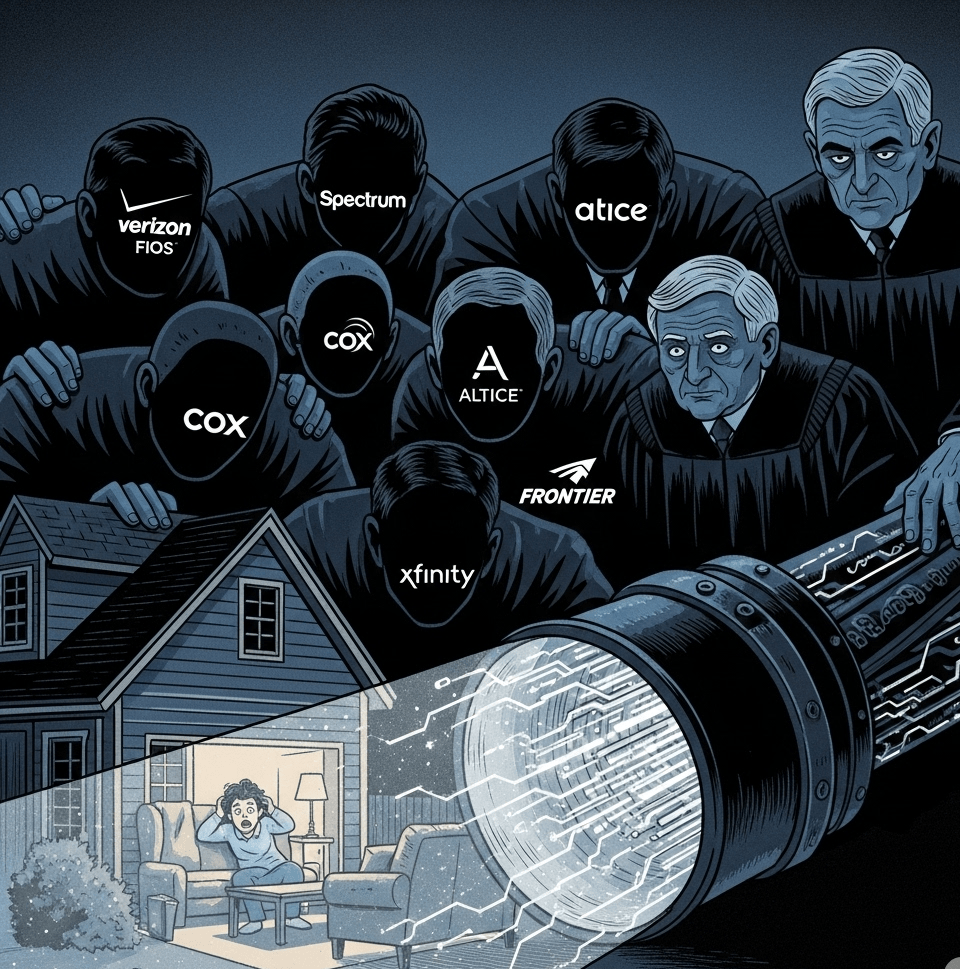
Ever feel like the legal system is a bit… tilted? Especially when it comes to copyright and those shadowy “John Doe” lawsuits? You’re not alone. Welcome to the federal courtroom, where, for some, the scales of justice seem to be weighing down on the little guy while corporate interests dance a jig.
Let’s talk about our esteemed federal judges. Bless their hearts, they’re busy folks. But when it comes to the deluge of copyright infringement lawsuits, particularly those brought by entities like Strike 3 Holdings over alleged downloads of content from Vixen, Tushy, Blacked, Blacked Raw, Tushy Raw, Deeper, Slayed, Wifey, and Milfy, one might observe a distinct judicial… lassitude.
It often starts with a permissive nod. A simple motion for early discovery? Granted! Suddenly, your ISP, who promised to guard your privacy like a dragon guarding gold, is handing over your identity faster than you can say “statutory damages.” Why the quick approval? Because, in theory, copyright holders do have rights. But the problem isn’t the right; it’s the abuse of that right.
This isn’t about protecting artistic integrity; it’s about financial extortion. These aren’t your typical mom-and-pop creators fighting for their livelihood. These are often corporate entities leveraging the sheer terror of federal litigation, astronomical potential damages (up to $150,000 per infringement!), and the sheer embarrassment of the content involved to coerce quick, quiet settlements.
And our federal judges? Well, sometimes they appear to be in a state of advanced contemplation… or perhaps a deep, undisturbed slumber. They might seem bewildered by the technicalities of BitTorrent, or simply too overwhelmed by the sheer volume of these identical cases to truly scrutinize the plaintiff’s tactics. This “could-care-less” or emotionless stance, whether born of weariness or perceived adherence to procedure, inadvertently allows the corporate interests to flourish.
This creates a disproportionate power dynamic. On one side, you have a well-oiled litigation machine, armed with dedicated attorneys (like the often-cited Lincoln Bandlow, John C. Atkin, and Jacqueline James), and a business model built on volume settlements. On the other side, you have a regular person, often with no prior legal experience, facing the daunting prospect of federal court, potentially astronomical fees, and the humiliating public exposure of their alleged online activities.
The system, designed to protect intellectual property, morphs into a tool for profit maximization, where the threat of litigation becomes the product. And who pays the price? Not the alleged major pirates, but often ordinary individuals who might have engaged in a single, ill-advised download.
So, while the judges snooze and the gavels gather dust on the bench, the cash registers of “litigation machines” keep ringing. It’s a sobering reminder that sometimes, justice isn’t just blind; it’s also a little bit sleepy, allowing the legal ecosystem to become a very profitable hunting ground for some, at the severe detriment of everyone else. Perhaps a strong cup of coffee, or a renewed interest in the spirit, not just the letter, of copyright law, is in order for our federal judiciary.
 Strike 3 Litigation
Leave a comment