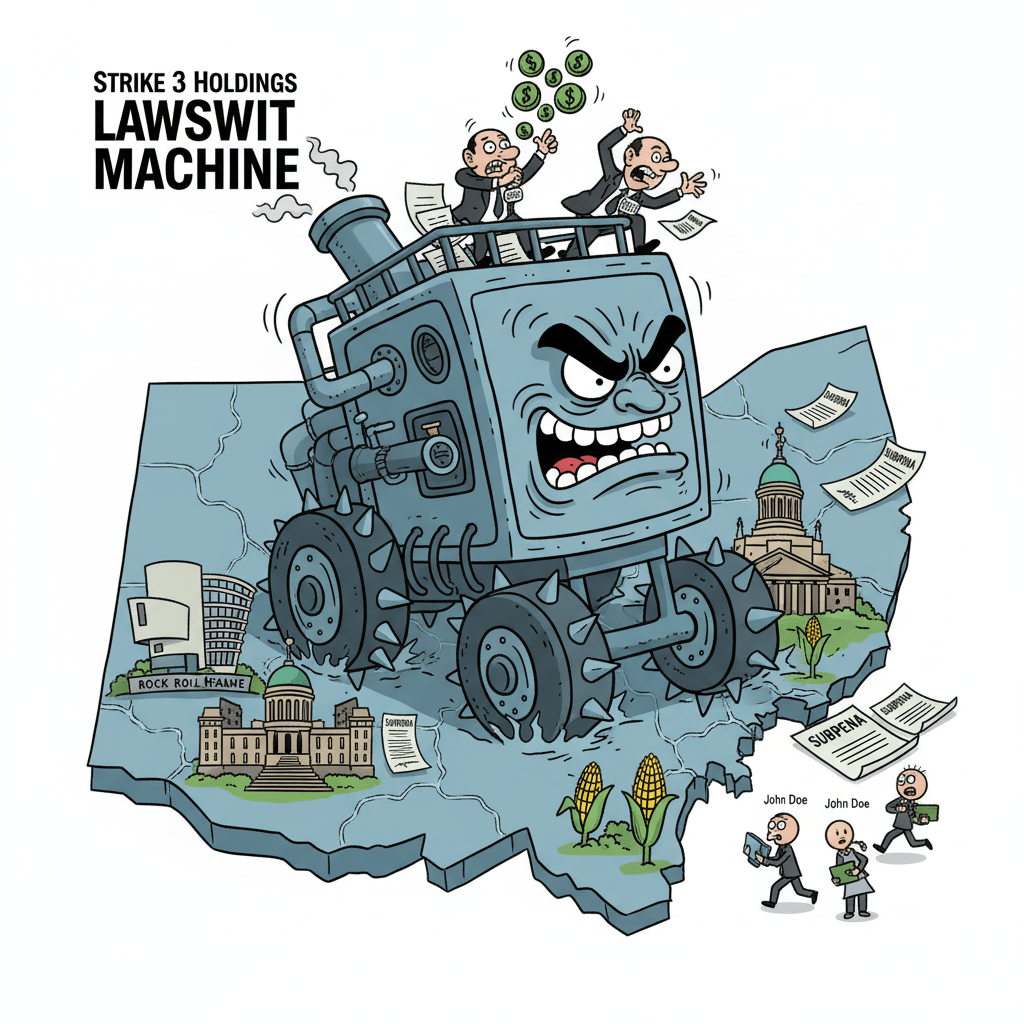
Just when you thought the “gravy train” was a cross-country express, it appears Strike 3 Holdings has added some unexpected stops to its itinerary. After a brief detour through Michigan, the company’s legal team has decided to file lawsuits in some truly picturesque, and utterly surprising, new locales.
The biggest new destination is Ohio, which has seen a flood of filings in both its Southern and Northern District Courts. It seems the legal team is making a thorough tour of the Buckeye State. But the most unexpected filings have landed in a place far from the Midwest: Hawaii. With a handful of cases hitting the district court there, one can only imagine the legal strategy meeting that led to this decision. Was it a chance to serve subpoenas with a lei and a warm breeze?
Beyond these new fronts, filings also popped up in both the Eastern and Western Districts of North Carolina, as well as a new case in the Michigan Eastern District Court.
While the sun may be shining in Honolulu, and the fall foliage is turning in Ohio, the legal weather is looking stormy for the latest round of “John Does.” This new wave of filings is a stark reminder that when it comes to copyright enforcement, there’s no vacation from the litigation machine.
Ohio Southern District Court
Strike 3 Holdings, LLC v. Doe (2:25-cv-01022)
Filed: Sep 09, 2025
Judge: Edmund A Sargus
Strike 3 Holdings, LLC v. Doe (2:25-cv-01017)
Filed: Sep 09, 2025
Judge: Algenon L Marbley
Strike 3 Holdings, LLC v. Doe (2:25-cv-01023)
Filed: Sep 09, 2025
Judge: Sarah D Morrison
Strike 3 Holdings, LLC v. Doe (3:25-cv-00296)
Filed: Sep 09, 2025
Judge: Michael J Newman
Strike 3 Holdings, LLC v. Doe (2:25-cv-01020)
Filed: Sep 09, 2025
Judge: Algenon L Marbley
Strike 3 Holdings, LLC v. Doe (3:25-cv-00295)
Filed: Sep 09, 2025
Judge: Michael J Newman
Strike 3 Holdings, LLC v. Doe (2:25-cv-01019)
Filed: Sep 09, 2025
Judge: Edmund A Sargus
Strike 3 Holdings, LLC v. Doe (1:25-cv-00656)
Filed: Sep 09, 2025
Judge: Douglas R Cole
Strike 3 Holdings, LLC v. Doe (3:25-cv-00297)
Filed: Sep 09, 2025
Judge: Michael J Newman
Hawaii District Court
Strike 3 Holdings, LLC v. Doe (1:25-cv-00388)
Filed: Sep 09, 2025
Strike 3 Holdings, LLC v. Doe (1:25-cv-00385)
Filed: Sep 09, 2025
Judge: Micah WJ Smith
Strike 3 Holdings, LLC v. Doe (1:25-cv-00386)
Filed: Sep 09, 2025
Strike 3 Holdings, LLC v. Doe (1:25-cv-00387)
Filed: Sep 09, 2025
Judge: Derrick K Watson
North Carolina Western District Court
Strike 3 Holdings, LLC v. Doe (3:25-cv-00690)
Filed: Sep 10, 2025
Judge: Max O Cogburn, Jr
North Carolina Eastern District Court
Strike 3 Holdings, LLC v. Doe (5:25-cv-00575)
Filed: Sep 10, 2025
Judge: James C Dever, III
Ohio Northern District Court
Strike 3 Holdings, LLC v. Doe (3:25-cv-01965)
Filed: Sep 16, 2025
Judge: Jack Zouhary
Strike 3 Holdings LLC v. Doe (4:25-cv-01966)
Filed: Sep 16, 2025
Judge: Benita Y Pearson
Strike 3 Holdings LLC v. Doe (4:25-cv-01967)
Filed: Sep 16, 2025
Judge: Benita Y Pearson
Strike 3 Holdings, LLC v. Doe (1:25-cv-01964)
Filed: Sep 16, 2025
Judge: Donald C Nugent
Strike 3 Holdings LLC v. Doe (5:25-cv-01957)
Filed: Sep 15, 2025
Strike 3 Holdings LLC v. Doe (5:25-cv-01956)
Filed: Sep 15, 2025
Strike 3 Holdings LLC v. Doe (5:25-cv-01955)
Filed: Sep 15, 2025
Strike 3 Holdings LLC v. Doe (1:25-cv-01958)
Filed: Sep 15, 2025
Michigan Eastern District Court
Strike 3 Holdings, LLC v. John Doe (2:25-cv-12916)
Just when you thought the “gravy train” of copyright lawsuits had found its favorite stops, Strike 3 Holdings has decided to take a scenic tour. On September 8, 2025, a fresh batch of 17 new cases hit the federal dockets, with a particularly heavy concentration in the courts of Michigan. It seems the Great Lakes State is about to get a crash course in the legal machine that has kept so many lawyers busy and so many internet users worried.
The filings are split between the Michigan Eastern and Western District Courts, a clear sign that Strike 3 is casting a wide net across the state. Judges with names like Shalina D Kumar, Terrence G Berg, and Robert J White are now on the frontline, staring down their own stacks of “Strike 3 Holdings v. John Doe” paperwork. One can only hope their coffee is strong.
But Michigan isn’t alone in this legal blitz. The California Eastern District Court also received a new wave of cases, reminding us that no single state can corner the market on alleged copyright infringement.
This new geographical focus highlights the relentless and systematic nature of the Strike 3 business model. It’s a game of numbers, and it seems Michigan has just become the newest piece on the chessboard. The “John Does” may be anonymous for now, but in the world of copyright trolling, a quiet download can lead to a very public legal fight. So, to all our friends in the Mitten State, consider yourselves officially on notice. The digital dragnet has a new target, and it’s coming to a court near you.
Michigan Eastern District Court
Strike 3 Holdings, LLC v. John Doe (2:25-cv-12835)
Filed: Sep 08, 2025
Judge: Shalina D Kumar
Strike 3 Holdings, LLC v. John Doe (2:25-cv-12838)
Filed: Sep 08, 2025
Judge: Terrence G Berg
Strike 3 Holdings, LLC v. John Doe (2:25-cv-12844)
Filed: Sep 08, 2025
Judge: Robert J White
Strike 3 Holdings, LLC v. John Doe (2:25-cv-12840)
Filed: Sep 08, 2025
Judge: Susan K Declercq
Strike 3 Holdings, LLC v. John Doe (2:25-cv-12837)
Filed: Sep 08, 2025
Judge: F Kay Behm
Strike 3 Holdings, LLC v. John Doe (2:25-cv-12845)
Filed: Sep 08, 2025
Judge: Judith E Levy
Michigan Western District Court
Strike 3 Holdings, LLC v. JOHN DOE (1:25-cv-01060)
Filed: Sep 08, 2025
Strike 3 Holdings, LLC v. John Doe (1:25-cv-01064)
Filed: Sep 08, 2025
Strike 3 Holdings, LLC v. John Doe (1:25-cv-01061)
Filed: Sep 08, 2025
California Eastern District Court
Strike 3 Holdings, LLC v. John Doe subscriber assigned IP address 73.189.81.31 (2:25-cv-02560)
Filed: Sep 08, 2025
Judge: Troy L Nunley
Strike 3 Holdings, LLC v. John Doe subscriber assigned IP address 73.2.94.142 (2:25-cv-02561)
Filed: Sep 08, 2025
Judge: William B Shubb
Strike 3 Holdings, LLC v. John Doe subscriber assigned IP address 73.2.94.142 (2:25-at-01190)
Filed: Sep 08, 2025
Strike 3 Holdings, LLC v. John Doe subscriber assigned IP address 67.174.148.177 (2:25-at-01191)
Filed: Sep 08, 2025
Strike 3 Holdings, LLC v. John Doe subscriber assigned IP address 67.172.172.43 (2:25-at-01192)
Filed: Sep 08, 2025
Strike 3 Holdings, LLC v. John Doe subscriber assigned IP address 99.89.119.145 (2:25-at-01193)
Filed: Sep 08, 2025
Strike 3 Holdings, LLC v. John Doe subscriber assigned IP address 104.8.37.9 (2:25-at-01194)
Filed: Sep 08, 2025
Strike 3 Holdings, LLC v. John Doe subscriber assigned IP address 73.12.248.23 (2:25-at-01195)
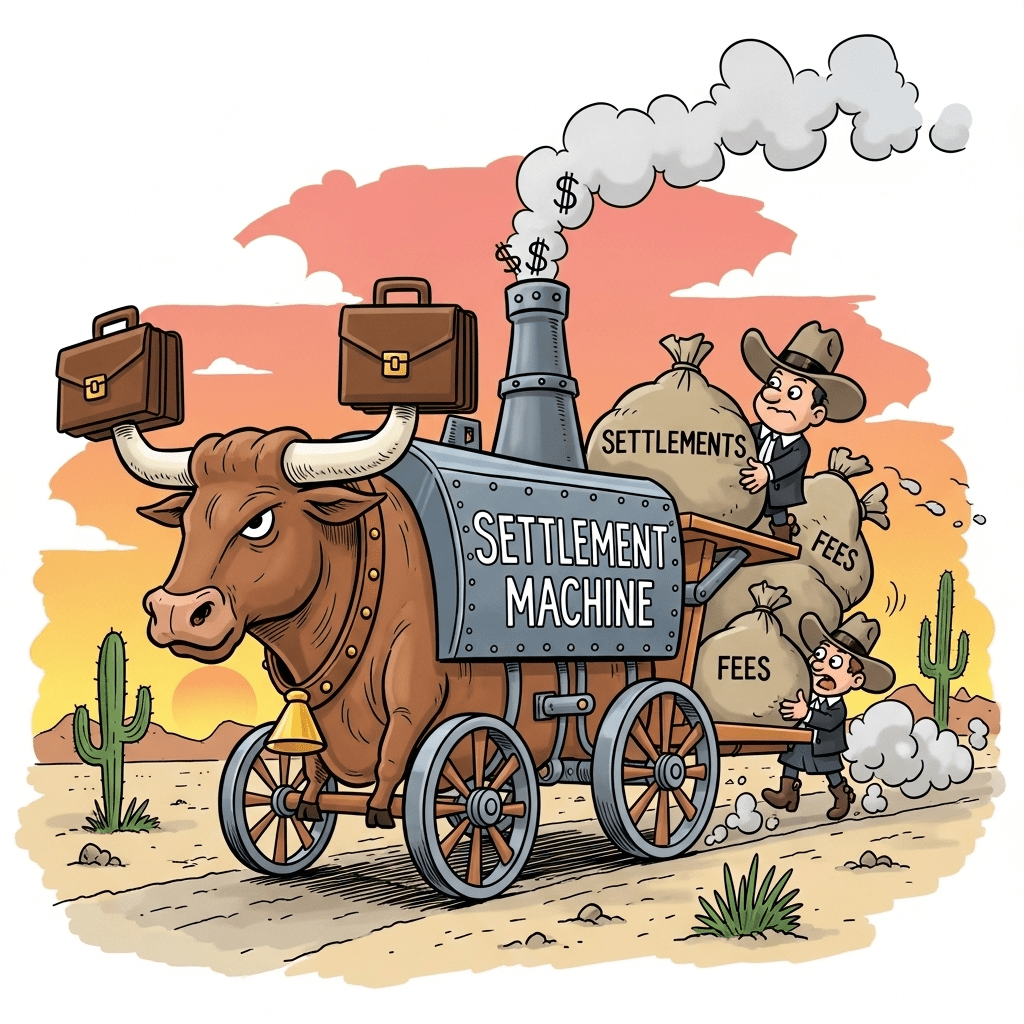
Y’all remember that little posse of “John Doe” lawsuits we talked about a few weeks back, the one that rode into the Texas courts? Well, it looks like that little posse has gone and multiplied. According to new court filings Strike 3 Holdings have saddled up and hit the trail, filing a whopping 232 new cases between September 2nd and September 5th.
While we’ve still got a good number of these cases landing in the Texas Southern District Court, it seems the “settlement machine” has decided to expand its territory. This new stampede has thundered all across the country, with new filings cropping up from the sunny plains of Florida to the snowy peaks of Minnesota. Cases were filed in:
Texas Southern District Court
Florida Middle and Southern District Courts
New Jersey District Court
Pennsylvania Middle and Eastern District Courts
Massachusetts District Court
Illinois Northern District Court
Connecticut District Court
California Central District Court
New York Eastern and Northern District Courts
Colorado District Court
Minnesota District Court
Get a vpn, PREFERABLY OUTSIDE THE JURISDICTION OF PUSHOVER AMERICAN FEDERAL COURTS. TOO BAD WE CANT GET A FOREIGN ISP
Well, howdy, folks. Just when you thought the dust had settled on the ol’ copyright trail, a new posse of “John Doe” lawsuits has ridden into the Lone Star State. On August 29, 2025, attorney Paul Beik of Strike 3 Holdings filed a fresh batch of 15 cases across both the Texas Western and Northern District Courts. It seems the “gravy train” is not just running; it’s got a brand new, Texas-sized engine.
From San Antonio to Dallas, the filings are hitting the courts like a stampede of digital cattle. It’s a classic two-step: first, an IP address is identified, then a subpoena is issued to an unsuspecting ISP, and finally, a settlement letter is sent to a bewildered internet user. The Texas courts are now the new proving ground for this business model, and attorney Belk is leading the charge with a steely gaze and a briefcase full of subpoenas.
This new wave of filings reminds us that the “copyright troll” model is relentless. It doesn’t matter if you’re in the Hill Country or the Panhandle; if you’ve been flagged for alleged infringement, you’re on the radar. The question for these new “John Does” isn’t “if,” but “when” they’ll receive that ominous letter.
So, while the sun sets over the Texas landscape, the legal machine grinds on. The “John Does” may be anonymous for now, but in the world of copyright trolling, it’s only a matter of time before they’re unmasked and asked to pay their due. It’s a new day, a new state, and a new round of lawsuits on the never-ending gravy train.
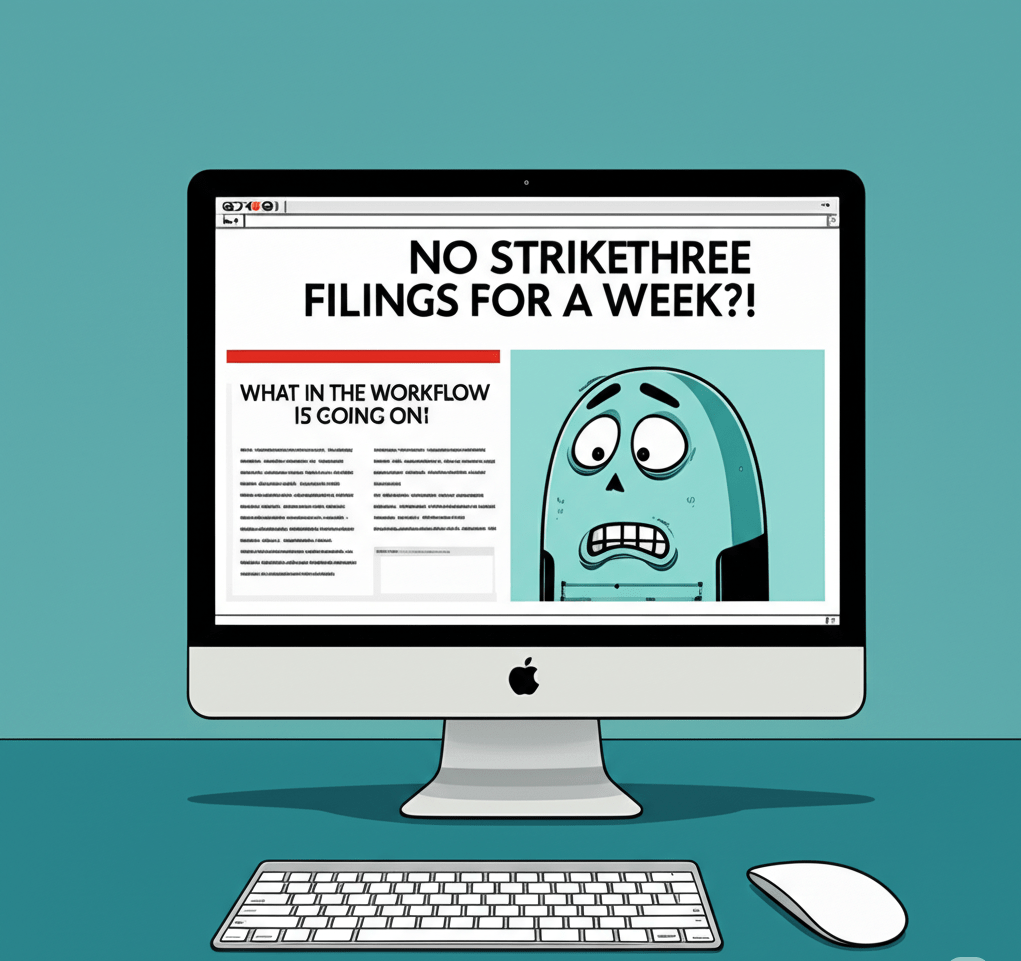
Well, butter my biscuits and call me surprised! For a whole week now, my inbox – and likely the PACER system – has been strangely devoid of those oh-so-familiar “Strike 3 Holdings” copyright infringement lawsuit filings. Yes, you heard that right. A whole seven days of digital peace on the infringement front. In the wild world of online content and its guardians, this is akin to finding a unicorn riding a unicycle while juggling flaming torches – unexpected and frankly, a little unsettling.
So, what gives? What cosmic or perhaps just bureaucratic event has caused this momentary lull in the legal proceedings? Let’s put on our Sherlock Holmes hats (or maybe just our thinking caps fueled by lukewarm coffee) and speculate on the possibilities:
Possibility #1: The Great Data Purge. Maybe their sophisticated algorithms that sniff out alleged infringers have temporarily gone haywire. Perhaps a rogue semicolon in the code decided to take an unscheduled vacation, leaving their digital bloodhounds scratching their virtual heads in confusion. Imagine the IT department scrambling, muttering about needing more coffee and less legacy code.
Possibility #2: Lawyers on Location (and Maybe on Vacation?). Could it be that the legal eagles over at Strike 3 have all decamped to some exotic locale for a mandatory team-building exercise? Picture this: a white-sand beach, the gentle sound of waves, and a PowerPoint presentation on the latest case law. Or maybe, just maybe, they’re all finally taking a well-deserved vacation. Even copyright crusaders need a break to recharge their legal batteries, right? Perhaps they’re learning to make sandcastles shaped like DMCA takedown notices.
Possibility #3: A Strategic Pause? Could this be a strategic move? Are they gearing up for an even larger wave of filings? Perhaps they’re meticulously gathering evidence, sharpening their legal swords, and preparing to unleash a torrent of lawsuits that will make the past few months look like a gentle drizzle. The quiet before the storm, if you will.
Possibility #4: Something Else Entirely (The Wildcard). Maybe there’s a significant legal development on the horizon that’s causing them to reassess their strategy. Perhaps a landmark ruling in a similar case has prompted a temporary rethink. Or maybe (and this is pure tinfoil hat territory), they’ve discovered a new, more effective way to combat infringement that doesn’t involve mass filings. Stranger things have happened, haven’t they?
Whatever the reason, this brief respite in the Strike 3 filings has certainly got the internet buzzing. Are we in the eye of the storm? Is this the new normal? Only time will tell. In the meantime, perhaps we can all take a deep breath and enjoy the momentary silence. But let’s be honest, we’ll probably all be refreshing PACER again tomorrow, just in case.
What are your theories? Let us know in the comments below!
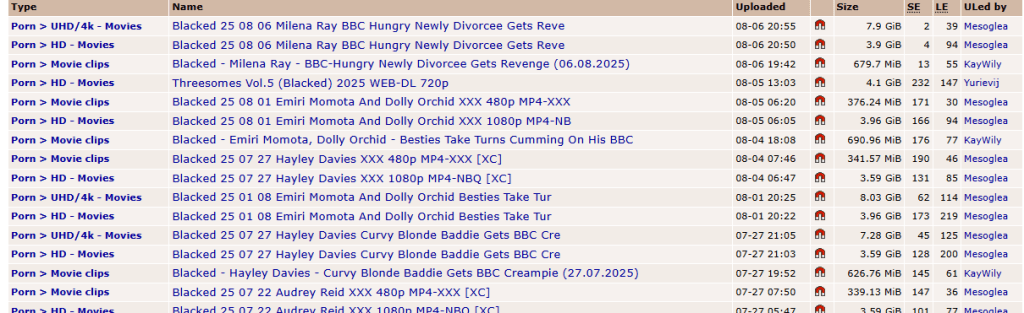
The latest crop of files making the rounds on torrent sites has the digital world buzzing—and it’s not just about the usual high-def blockbusters. The attached image gives us a peek into this illicit marketplace, where “Blacked” content is being openly distributed.
The sheer volume and regularity of these uploads, complete with uploaders and file sizes, suggests a dedicated and well-organized operation. This raises a fascinating, and slightly unnerving, question: Who is the mastermind behind this digital deluge?
Could it be an insider, a disgruntled employee with a flash drive and a grudge, looking to disrupt the established order? Or perhaps it’s a highly skilled hacker, a digital ghost who slipped through the cracks and made off with the goods. The “leakers” and “seeders” remain anonymous, but their impact is undeniable. The presence of multiple uploaders, like “Mesoglea” and “KayWily,” could point to a coordinated group effort rather than a lone wolf, turning this into a high-tech heist.
But what if the answer is even more complex, perhaps even originating closer to the source? One could speculate, with a healthy dose of caution, whether this consistent stream of “Blacked” content could somehow be connected to Strike 3 Holdings themselves, or individuals with ties to the company. While seemingly counterintuitive, such a theory could posit various motivations, ranging from generating buzz and increasing demand through artificial scarcity down the line, to more convoluted strategies we can only guess at.
There’s an even more cynical angle to consider. Given the notoriously litigious nature of the company and the continuous stream of revenue generated from lawsuits against alleged infringers, one could speculate that the consistent torrenting of their content serves a perverted financial purpose. Rather than seeking to cut off the piracy completely, could the continuous stream of leaked content be a form of bait? A way to ensure a steady supply of potential legal targets, thereby allowing the lawsuit revenue to become a lucrative, and perhaps even intended, part of their business model. It’s a dark thought, but in the murky waters of online content distribution, where profit is king, such a strategy, however perverse, might not be entirely out of the question.
Welcome, dear readers, to today’s edition of The Troll Watch Gazette, where we shine the spotlight on the most charismatic and recent crusaders of copyright enforcement. Grab your popcorn (and maybe your VPN) — this one’s going to be fun. THEY WANNA UNMASK YOU THROUGH LEGAL MACHINARY, lets take a look at thier public information
Inez de Ondarza Simmons, I – De Ondarza Simmons PLLC
With a name fit for a royal decree, Inez brings an old-world gravitas to the decidedly modern battlefield of IP enforcement. She a copyright blood sucker suing in the Carolinas
Few surnames capture the emotional soundtrack of a defendant’s reaction quite like Waugh. Short, punchy, and perfect for muttering under your breath while Googling “how to respond to a summons.” He actually has I face imagine a copyright “defender” to have. He suing in the Florida Area- I guess all those home values and Northerners have made Florida a viable strike 3 target. If its not the Roofers or Insurance companies try to get u, now sunshine state has to worry about another parasitic-like entity. Lets give praise to Maxmind for that
Joel A. Bernier – Boroja, Bernier & Associates, PLLC
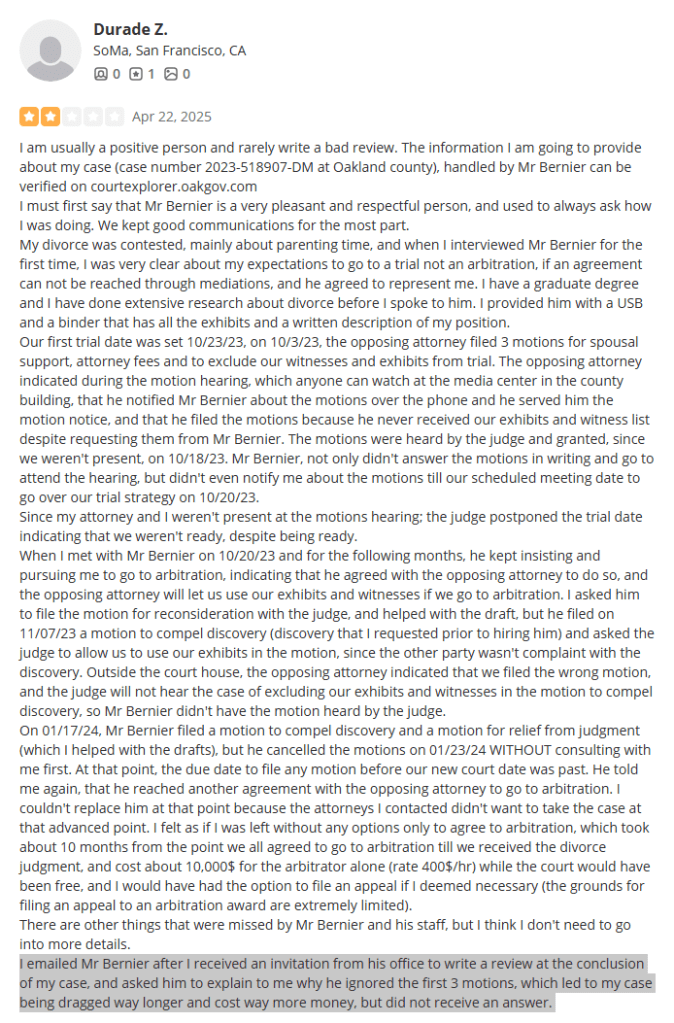
That’s right — a Gmail address?. In a world of stern-looking .law and .firm domains, Joel keeps it relatable. After all, nothing says “we’re coming for you” quite like a polite, slightly informal ping from your uncle’s favorite email service. He suing for Strike 3 in the Middle States Like Michigan. The Review below just shows you essentially how lawyers are never your friend-ever. Get educated and deal with them as minimally as possible
John Charles Ridge – Ridge Law, LLC
John Charles Ridge Ridge Law, LLC, 3136 Kingsdale Center # 119
When John Charles Ridge enters the chat — or the courtroom — you can almost hear the collective gulp from “John Does” across the nation. His phone must be a symphony of nervous ring tones and awkward voicemails. Probably not, it’s probably full of defense attorneys colluding(…. I mean settling) and laughing with strike 3 lawyers to the Bank!!!. Hes suing in Ohio(getting awfully close to Atkins and Jackies lawsuit territory)
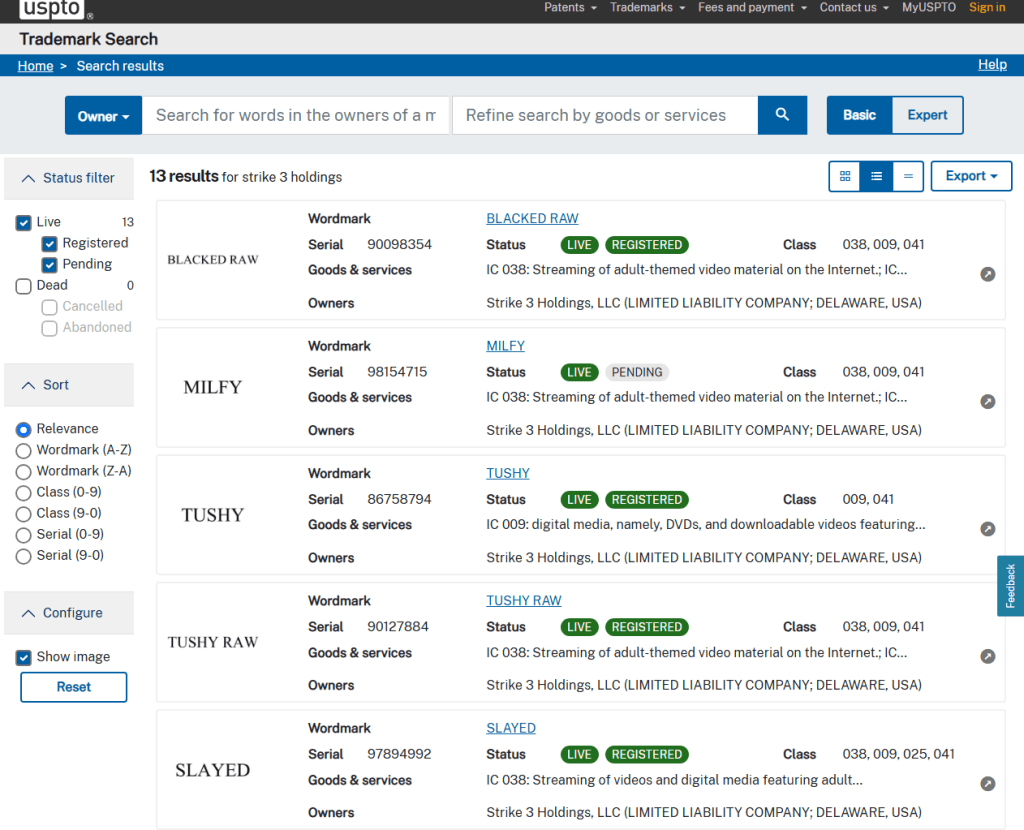
Ever wondered what trademarks a company named “Strike 3 Holdings” might have up its sleeve?
A recent search on an official United States government website reveals the answer. Based in Delaware, USA, Strike 3 Holdings, LLC has a portfolio of 13 trademarks that are either live and registered or live and pending
The Trademarks of Strike 3 Holdings
WIFEY.COM : This trademark (serial number 99050174) is LIVE PENDING and is for clothing, namely hats, swimwear, jackets, and pants.
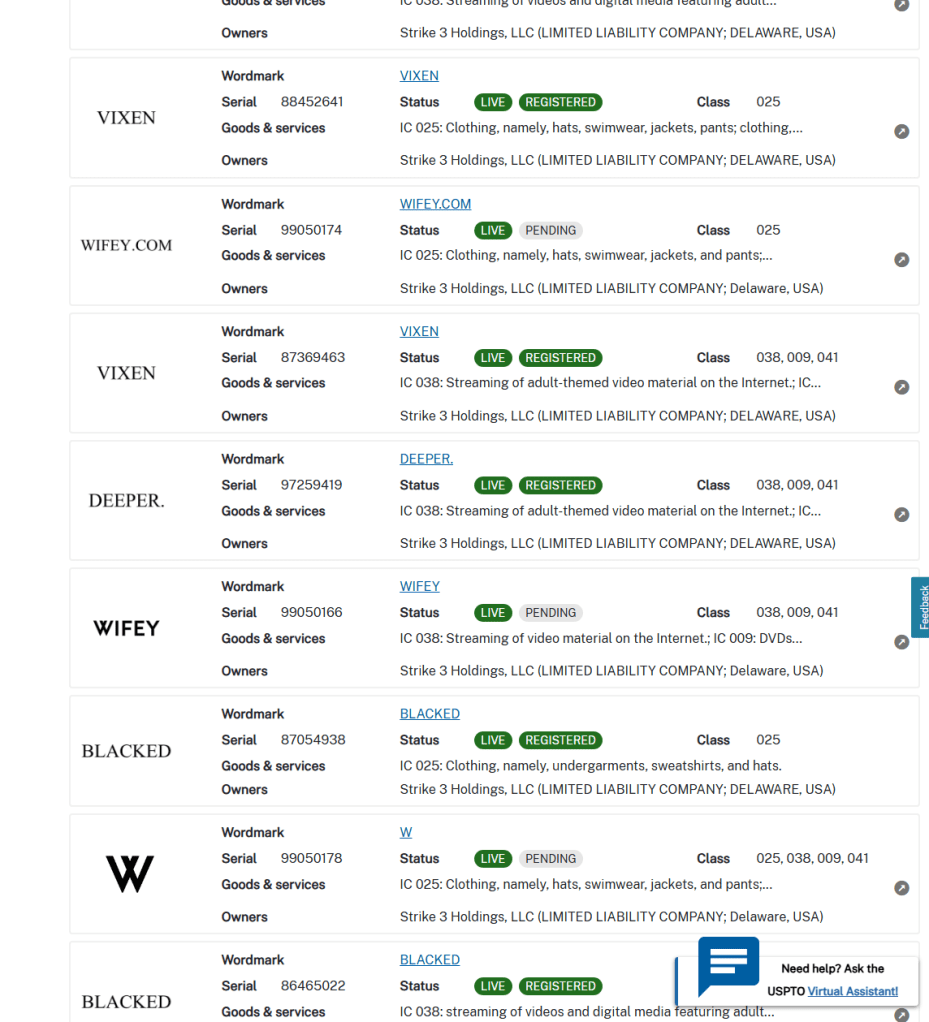
BLACKED: The company holds two trademarks for “BLACKED”. One, with serial number 87054938, is LIVE REGISTERED for clothing, including undergarments, sweatshirts, and hats. The other, serial number 86465022, is also LIVE REGISTERED and covers the streaming of videos and digital media featuring adult content.
BLACKED RAW: This LIVE REGISTERED trademark (serial number 90098354) is for the streaming of adult-themed video material on the Internet.
DEEPER.: With a status of REGISTERED LIVE, this trademark (serial number 97259419) is for the streaming of adult-themed video material on the Internet.
MILFY: This trademark is LIVE PENDING (serial number 98154715) and is for the streaming of adult-themed video material on the Internet.
SLAYED: A LIVE REGISTERED trademark (serial number 97894992) for streaming videos and digital media featuring adult content.
TUSHY: This trademark (serial number 86758794) is LIVE REGISTERED and covers digital media like DVDs and downloadable videos.
TUSHY RAW: With a serial number of 90127884, this is a LIVE REGISTERED trademark for streaming adult-themed video material on the Internet.
VIXEN: Strike 3 Holdings has two trademarks for “VIXEN”. One is a LIVE REGISTERED trademark (serial number 88452641) for clothing, including hats, swimwear, jackets, and pants. The other (serial number 87369463) is REGISTERED LIVE and covers the streaming of adult-themed video material on the Internet.
W: This trademark (serial number 99050178) is LIVE PENDING and is for clothing, specifically hats, swimwear, jackets, and pants.(Will u get sued for wearing their clothes without subscrbing to it?)
WIFEY: With a PENDING LIVE status, this trademark (serial number 99050166) is for the streaming of video material on the Internet and DVDs.
We’ve talked about the lawyers, the judges, and the clients caught in the copyright troll machine. We’ve even discussed the duplicitous ISPs. But what if the solution to this whole saga doesn’t lie within the courtroom at all? What if the key to stopping the “gravy train” is held by an entirely different kind of power broker: the tech giants or the very people who write the laws?
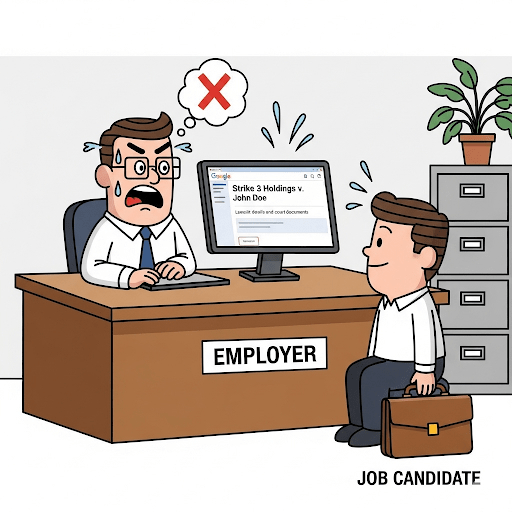
Let’s face it: the entire Strike 3 business model hinges on one thing—the fear of a “Google search.” The threat of public embarrassment and the potential for a boss, a family member, or a future employer to find a federal lawsuit tied to your name is the ultimate leverage. So what if you removed that leverage?
The Power of the Index: Can Google, Meta, or Microsoft Be the Hero?
Imagine for a moment that companies like Google, Microsoft (through Bing), and Yahoo decided to make a stand. The PACER system, while public, isn’t exactly a user-friendly website. Its records are indexed by search engines, which is how a simple name search can yield a court case.
What if these tech giants collectively decided to de-index these specific types of lawsuits? What if a search for “John Doe” and a specific case number no longer returned a prominent, front-page result? This wouldn’t be an act of censorship; it would be a policy decision to protect user privacy from a system that is being exploited for financial gain. They could argue that the public’s right to know is outweighed by the individual’s right to privacy, especially when the case is a mass-filing tactic and not a traditional legal dispute. Such a move would pull the rug out from under the entire business model, forcing the plaintiffs to actually litigate their cases rather than just threaten to.
Legislating Away the Leverage
Another powerful force could be the legislature. The legal system itself could be changed to better protect the privacy of “John Doe” defendants. A new law could be passed that shields the identity of the accused from public view until a motion to unseal is granted and a judge determines there is probable cause and a legitimate legal reason to proceed. Or, even more drastically, a law could be enacted to make it illegal for a company to sue “John Doe” defendants based solely on an IP address.
This would be a direct attack on the copyright troll model. It would force a more rigorous legal process, one where the plaintiff would have to present a more compelling case than just “we found this IP address.” It would remove the “rubber stamp” from the judges’ desks and require a higher standard of proof before someone’s life is potentially upended.
A Double-Edged Sword for the Gravy Train
Either of these solutions would be a monumental shift. It would be a blow not only to the plaintiffs like Strike 3 Holdings, but also to the defense attorneys who have built their businesses on managing these cases. The gravy train would grind to a halt, and both sides of the legal coin would have to find a new way to earn a living.
It’s a speculative scenario, to be sure. But in a world where wealth extraction through the legal system is becoming more and more brazen, a creative and decisive solution is needed. The power to dismantle this particular machine may not lie in a legal brief, but rather in a line of code or a new law. The question is: who will be the first to make a move?
In the grand, satirical theater of “John Doe” litigation, we’ve marveled at the new lawyers, the complacent judges, and the duplicitous ISPs. But a deeper, more unsettling question remains: why does this whole machine keep running?
It’s not just a single gear turning; it’s a complex, self-sustaining ecosystem where every player, even those you might think should be fighting back, has a reason to keep the “gravy train” moving.
The Defense Attorney’s Dilemma: Don’t Kill the Golden Goose
You might think that a good defense attorney would have every incentive to put an end to this madness. To file a motion that would finally, once and for all, get a court to rule against these blanket subpoenas and copyright troll business models. But in the world of “John Doe” defense, that would be a catastrophic business decision.
Consider the reality for a lawyer on the defense side. They have lavish lifestyles and upkeep to maintain. They have crushing student loans payments looming over them. They are, after all, running a business. The constant, predictable stream of Strike 3 cases, each with its own settlement opportunity, is a reliable source of income.
If a defense attorney were to truly “win”—that is, if they were to set a precedent that made it impossible for Strike 3 to operate—they would be killing their own business model. The steady flow of worried clients, each willing to pay a few thousand dollars to make the problem go away, would dry up instantly. In this bizarre economy, a decisive victory is a financial defeat.
The Fear Factor: Google is the Ultimate Judge
On the other side of the equation is the client. The “John Doe” subscriber who just received a threatening letter from their ISP. This person isn’t an intellectual property lawyer; they’re a regular person with a family, a job, and a reputation to protect.
The real leverage for the copyright trolls isn’t the threat of a court battle; it’s the threat of a name. For most people, the fear of a simple “Google search” revealing that they were involved in a federal lawsuit for downloading adult films is more terrifying than any legal proceeding. It’s the risk of embarrassment, the potential for a boss or a neighbor to find out, that forces a quick settlement.
The lawyer for the plaintiff knows this. The lawyers for the defendant know this. The entire business model is built on this profound and very human fear.
A Vicious Cycle of Financial Incentives
So, the machine chugs along. The plaintiffs have an incentive to file cases to generate settlements. The ISPs have an incentive to comply with subpoenas to avoid costly litigation and even earn a fee. The judges, as we’ve speculated, may just be going through the motions to clear their dockets. And the defense attorneys, the very people who could stop it, have a strong financial incentive to keep the machine running, to manage the problem rather than to solve it.
It’s a beautiful, terrible, and perfectly capitalist system. It’s not about justice; it’s about a series of calculated financial decisions that, when combined, create a seemingly unstoppable force of wealth extraction.










 Strike 3 Litigation