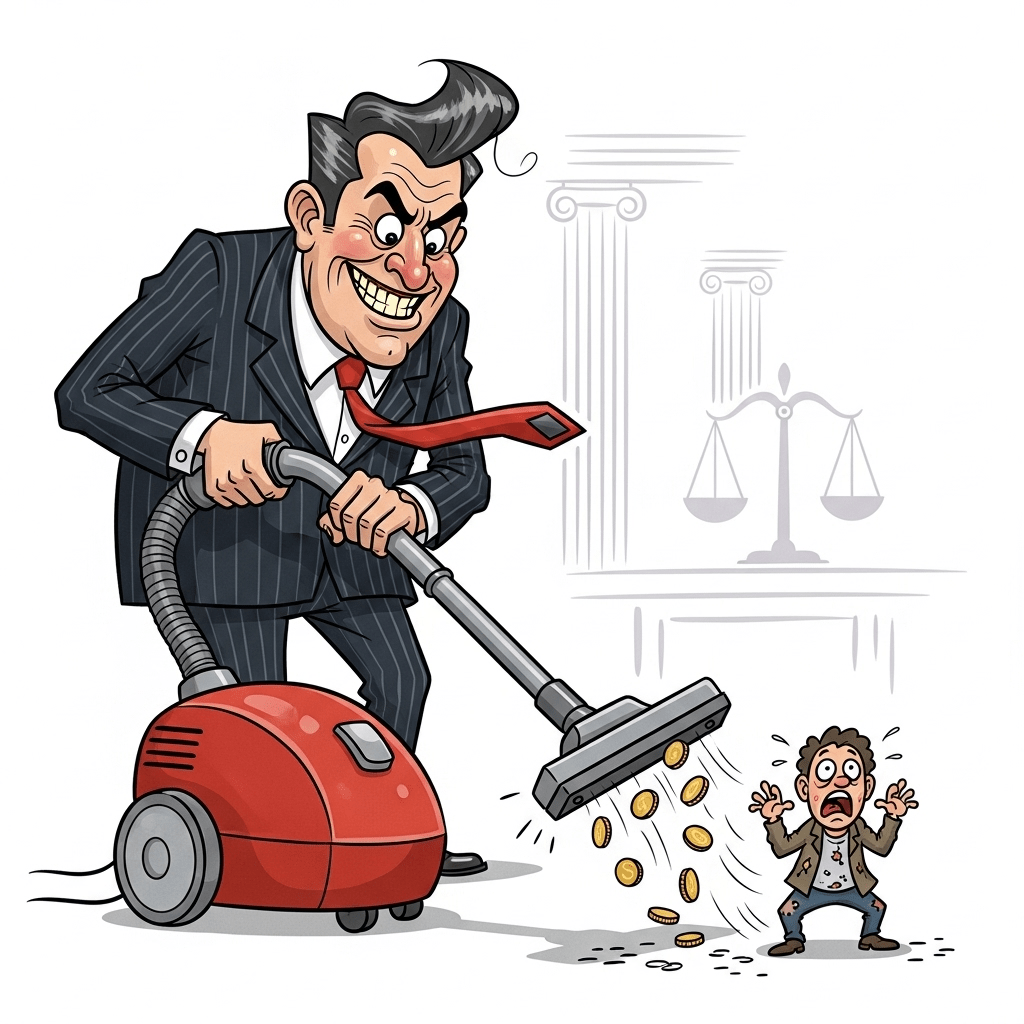
It’s easy to get lost in the day-to-day headlines, but sometimes you have to step back and look at the bigger picture. We’ve all seen the lists of “John Doe” lawsuits, the new cast of characters like John Charles Ridge and Joel A. Bernier jumping onto the scene, and the endless stream of cases from courts in places as far-flung as Texas and Hawaii. But what if this isn’t just about copyright law? What if it’s a symptom of a much larger systemic issue?
Let’s talk about the elephant in the room: plutocracy and wealth inequality. When wealth and power are concentrated in the hands of a few, it creates an environment where new forms of income generation—or, more accurately, “wealth extraction”—become not only possible but also seemingly acceptable. The system isn’t designed to protect the average person; it’s increasingly optimized to allow those with resources to extract value from those without.
The New Normal: From Wall Street to Main Street Lawsuits
Consider the “copyright troll” business model. It’s a perfect example of this in action. A company like Strike 3 Holdings, with its dedicated legal teams and financial backing, files mass lawsuits against anonymous individuals. These are not typically multi-million dollar corporations they’re targeting, but ordinary people who made a small mistake online.
The strategy isn’t to win in court, but to use the intimidating and expensive nature of the legal system to force a settlement. For a person facing a federal lawsuit, the cost of fighting it, even if they’re innocent, often outweighs the cost of a settlement. The legal system, in this sense, becomes a tool for wealth transfer, moving money from the individual’s pocket to the corporate coffers.
This is where the plutocratic nature of our system comes into play. The rules of the game are set by those with power and influence. They have the resources to exploit legal gray areas and create business models around them. The vast wealth inequality means that the average person lacks the resources to push back, and the legal system, with its slow and costly processes, serves as a barrier rather than a shield.
 Strike 3 Litigation
Leave a comment